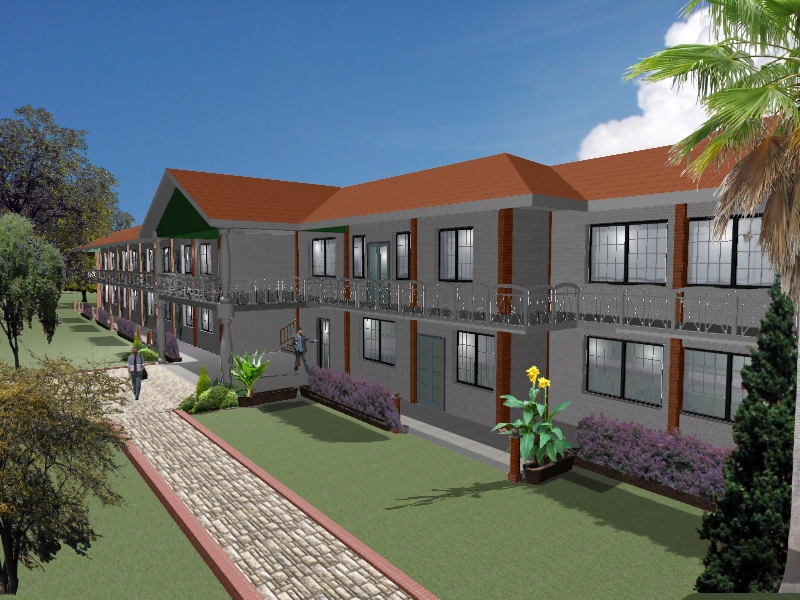
Meaning and Attributes of Architecture
Architecture is the objectification of the values humans hold essential to living: these values are made concrete by building and using the structures that form our environment.
Architecture has three attributes.
(An attribute is that which is essential to a system--without which the system either ceases to be or becomes something else.) It shelters a human's life; produces an efficient arrangement of space and utilities; and expresses the best of human life (the values that make life possible and worth while).
Architecture distinguishes between
existence and
living. The attributes of shelter and arrangement are primarily utilitarian. The attribute of expression is primarily aesthetic. All three must be harmoniously integrated, one with the other.
Architecture is created by transforming problems of shelter and arrangement into the expression of an explicit lifestyle, aesthetically practicing specific values. Utilitarian concerns--bricks, boards, aluminum, glass, steel--are the medium of the architectural art.
Architecture is the sound track to a person's life; expressing, leading, teaching, sometimes pushing--generally providing embellishment, highlight, focus, punctuation to that life and its meaning.
The three attributes must be in harmony, but they do exist in a natural hierarchy. The structure, or shelter, may allow a few feet one way or another and still properly shelter. Arrangement may allow a few inches (for most concerns) and still be efficient. Expression is usually a hairline concern: aesthetics is the fine tuning of the system.
The function of architecture is to create a proper environment for human beings according to their nature as a race, and as individuals. To function, architecture must be an expression of life, as well as a shelter for it. In a masterpiece work, one can find no element that does not reflect all three attributes of architecture as one.
The Way of Life
Lifestyle and use is the basis of all architectural theory and practice. In art, the artist eliminates the insignificant by focusing on what is important (to the artist). The art of architecture allows nothing to become unimportant by making every action within the environment an act of living art. This is done by expressing the essence of those values deemed important to life in concrete form, and by practicing those values through creative ritual and ceremony.